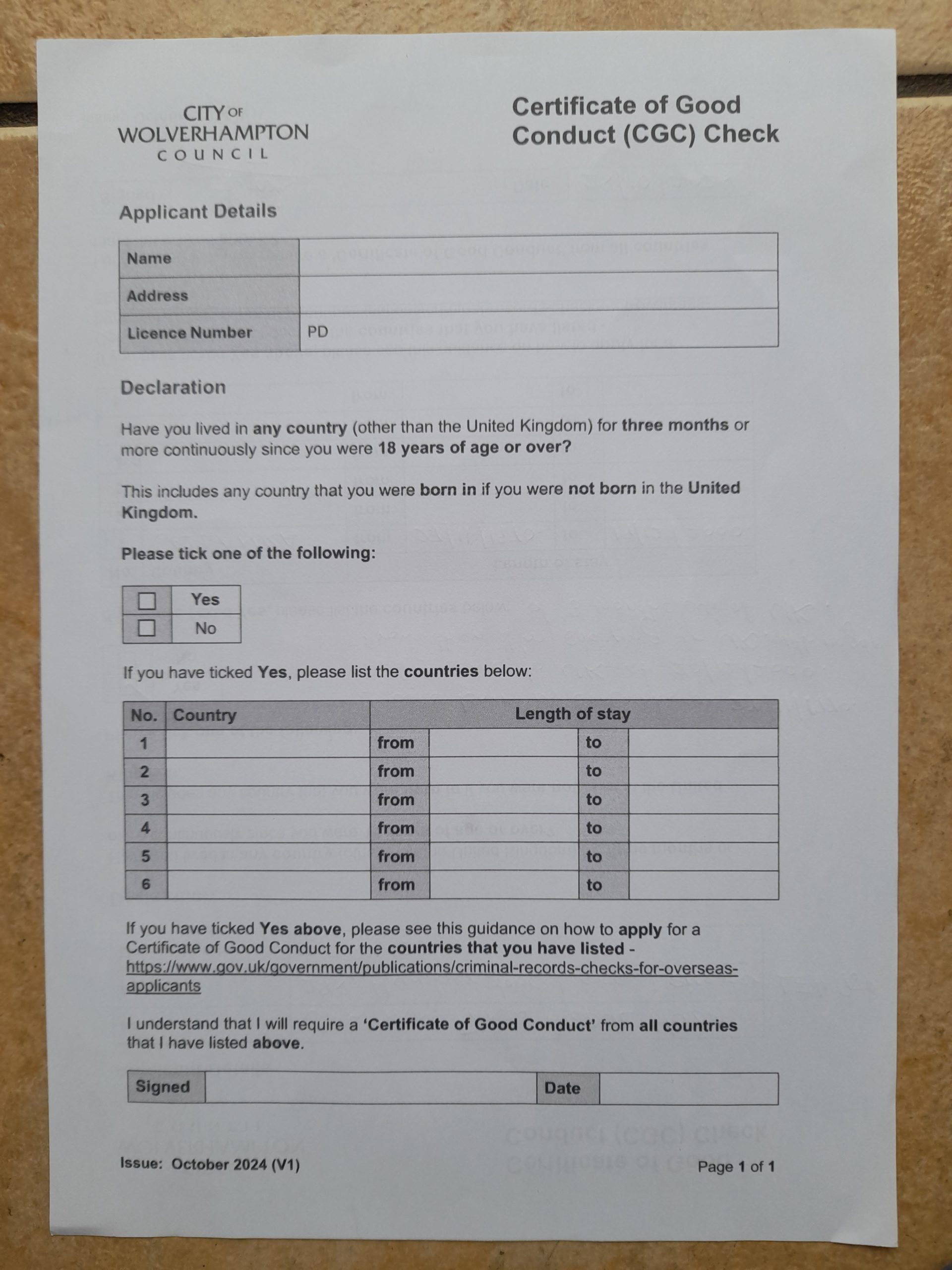
Challenging the Wolverhampton City Council for The Unfair Condition of “Certificate of Good Conduct” for the renewal of Taxi Badges
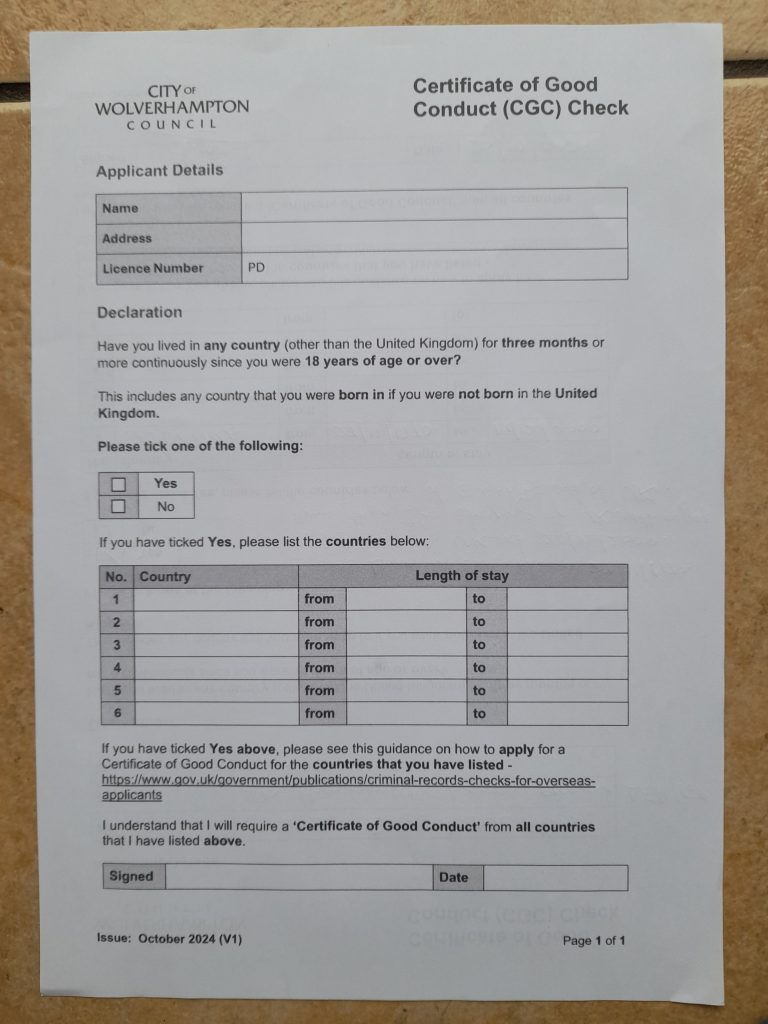
The Wolverhampton city council is sending letters to private taxi drivers to provide them the Certificate of Good Conduct on their renewal of taxi badges. This certificate is being asked even after the condition of DBS checks was fulfilled. But this certificate is obtained from other countries through the foreign embassies in the UK if the driver was born and in those countries even 18 years before he came to the UK. Moreover, any taxi driver whether he is an immigrant or a born British stayed more than 3 months out of the UK after he was 18 years old, he/she also should obtain the certificate from those countries.
Council’s this condition is very hard to cope up with, especially within this one month time limit. Hundreds of taxi drivers are going to lose their taxi badges unless the council either
- abandoning this idea
- Or give the drivers a little longer time allowing them to get the certificate and not tying up with the renewal
- Or giving the drivers other alternative options that may ease the drivers to full.
Challenging the local council law can be a complex process, but there are several ways to approach it, especially if it is negatively affecting many people. Here are some steps and strategies you might consider:
1. Gather Information and Evidence
Understand the Law: Obtain a copy of the law or regulation in question. Understand its provisions, scope, and the reasons given for its implementation.
Collect Evidence: Gather data and testimonies that demonstrate how the law is negatively impacting the community. This could include financial impacts, health and safety issues, environmental concerns, or infringement on rights.
2. Engage with the Community
Form a Coalition: Organize a group of affected individuals and stakeholders. A united front can be more effective than individual efforts.
Public Awareness: Raise awareness about the issue through social media, local newspapers, public meetings, and other channels. Highlight personal stories and factual evidence to garner public support.
3. Petition the Council
Create a Petition: Draft a petition outlining the issues with the law and the changes you are seeking. Collect signatures from affected community members.
Submit the Petition: Present the petition to the local council. Ensure it is submitted in accordance with the council’s procedures.
4. Engage with Local Councillors
Meet with Councillors: Schedule meetings with local councillors to discuss your concerns. Provide them with the evidence and petition to persuade them to support your cause.
Attend Council Meetings: Participate in council meetings where the law may be discussed. Speak during public comment periods to voice your concerns.
5. Legal Action
Consult a Lawyer: Seek legal advice to understand if the law can be challenged on legal grounds, such as being unconstitutional, violating human rights, or exceeding the council’s authority.
Judicial Review: File for a judicial review if there are grounds to believe the law is illegal or was enacted improperly. This involves taking the case to court to have the law reviewed and potentially overturned.
6. Media and Public Relations
Media Campaign: Engage local media to cover your story. Positive media coverage can put pressure on the council to reconsider the law.
Public Demonstrations: Organize peaceful protests and demonstrations to draw public attention to the issue.
7. Alternative Dispute Resolution
Mediation: Sometimes, councils may be willing to engage in mediation or negotiations to find a compromise that addresses the concerns of the affected community.
8. Electoral Action
Campaign for Change: Support or campaign for candidates in local elections who are sympathetic to your cause and are willing to challenge or change the law.
9. Lobbying
Lobby for Support: Engage with other influential community leaders, businesses, and organizations to support your cause and lobby the council for change.
10. Formal Complaints
Ombudsman: If you believe the council is acting unfairly or unreasonably, you can file a complaint with the local government ombudsman or equivalent body.
Conclusion
Challenging a local council law requires a strategic approach, combining legal, political, and community-based actions. By organizing, raising awareness, engaging with officials, and potentially taking legal action, you can increase the chances of having the law reviewed and amended or repealed.
Please read this related article as well: